

Leading Customer Experience in the AI Era: An Exclusive Interview with Dr. Angel Lo, Director of Marketing Communications, APAC at Olympus
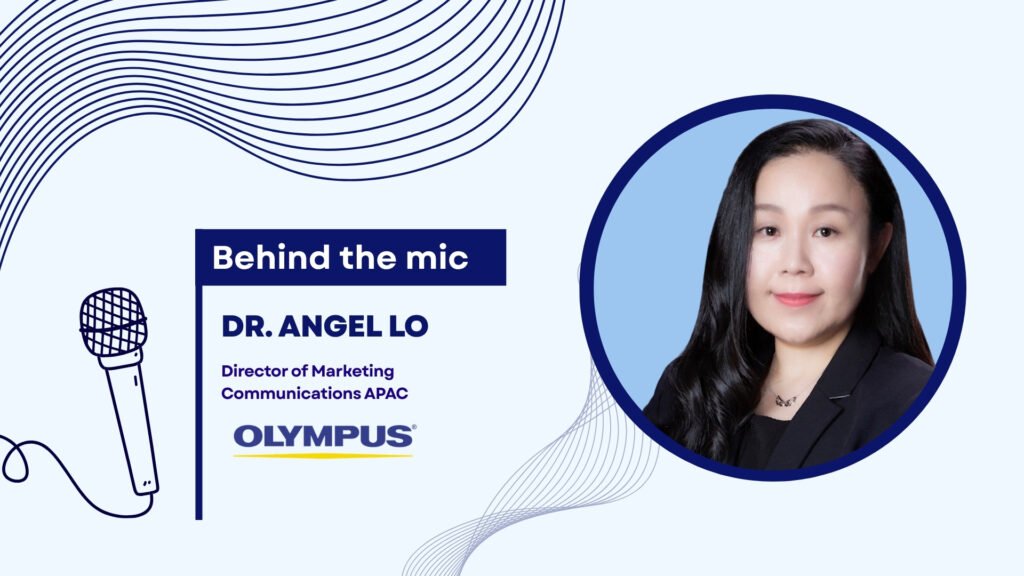
Dr. Angel Lo is a regional leader and conference speaker specializing in Marketing Communications, Customer Experience (CX), Digital
Transformation, and Omnichannel Strategy across Asia Pacific.
She currently serves as Director of Marketing Communications APAC at Olympus, leading regional MarCom strategy and execution as part of a global transformation to strengthen customer engagement, digital enablement, and commercial impact across diverse and highly regulated markets.
With over 15 years of leadership experience in MedTech, Biotech, Life Sciences, and High-Tech industries, Angel brings deep expertise in CRM/ERP modernization, digital customer platforms, omnichannel engagement, and commercial excellence. She is recognized for connecting strategy, technology, and execution to deliver measurable business outcomes, including revenue growth, customer engagement, and operational scalability.
As one of the featured speakers at the Conversational AI & Customer Experience Summit Singapore 2026, Dr. Angel Lo brings a wealth of experience in AI-driven customer experience transformation. In this interview, she shares practical insights on the following:
Q1. How have you seen emerging technologies such as AI, automation, and advanced analytics reshape customer engagement and marketing strategies over the course of your career?
Over the past decade, I have seen AI evolve from supporting individual marketing tasks to orchestrating end-to-end customer engagement. Today, AI is no longer just generating content or automating campaigns. It is becoming the intelligence layer that connects customer experience, marketing, sales, service and commercial teams.
In healthcare, this transformation is particularly significant. Customer engagement is moving from campaign-centric communication to personalized, data-driven experiences across the entire healthcare professional (HCP) journey. AI helps organizations understand customer intent, recommend the next best action, personalize educational content, and improve engagement while maintaining compliance.
However, technology alone is not enough. The biggest shift is combining AI with human expertise. In highly regulated industries such as MedTech, AI improves speed, scalability, and operational efficiency, while human oversight ensures clinical accuracy, regulatory compliance and trust. This human-AI co-pilot will continue to define successful customer engagement strategies in the years ahead.
Q2. What role does customer insight and data play in shaping effective omnichannel engagement strategies, and what best practices have you observed in this area?
Customer insight is the foundation of effective omnichannel engagement. Fragmented customer data remains a common challenge across many industries, particularly in large regional and global organizations where multiple platforms and business functions have evolved over time.
The most effective organizations build a 360-degree customer view that enables every interaction to become more relevant and contextual. Instead of treating each channel independently, they orchestrate customer journeys across digital and physical touchpoints.
Across APAC, another important consideration is regional diversity. Customer preferences, digital maturity, regulatory requirements and healthcare systems differ significantly between countries. Successful omnichannel strategies therefore combine regional consistency with local flexibility, allowing organizations to personalize engagement while maintaining governance and compliance.
Ultimately, omnichannel success is not measured by the number of channels deployed, but by how seamlessly they work together to create meaningful customer experiences.
Q3. What strategies have you found most effective in aligning marketing, customer experience, and commercial objectives to deliver measurable business outcomes?
Customer experience should never be viewed as a standalone initiative. It must be directly connected to commercial outcomes. Instead of measuring only marketing activities or customer satisfaction, organizations should establish clear links between customer engagement and business performance. Metrics such as customer adoption, engagement quality, sales conversion, retention and lifetime value provide a much stronger business narrative than isolated CX metrics.
Cross-functional collaboration is equally important. Marketing, commercial, digital, customer service, IT and analytics teams need shared objectives rather than operating independently. When everyone works towards common business outcomes, customer experience naturally becomes a strategic growth driver instead of a support function.
This alignment is becoming even more important as organizations adopt AI. AI is most valuable when it helps improve commercial decision-making, customer engagement and operational efficiency simultaneously.
Q4. How do you balance the adoption of AI and automation with the need to maintain authenticity, trust, and human connection in customer interactions?
AI should augment people rather than replace them. AI is excellent at processing large amounts of data, automating repetitive activities, and delivering personalized recommendations at scale. Human expertise remains essential for empathy, judgment, relationship building, and complex decision-making.
In healthcare, trust is fundamental. Medical information must be accurate, compliant, and ethically managed. Human oversight is therefore essential whenever AI supports customer engagement, clinical communication, or educational content.
Another important consideration is responsible data governance. Across APAC, privacy regulations such as Singapore’s PDPA, Hong Kong’s PDPO, Japan’s APPI, and Korea’s PIPA require organizations to manage customer data responsibly. Organizations that embed governance, transparency, and privacy into AI design will build greater long-term trust with customers.
The future is not AI versus humans. It is human-AI collaboration delivering better experiences together.
Q5. How do you stay updated with the latest trends and developments in customer experience, marketing technology, AI, and digital transformation?
Continuous learning has always been an important part of my professional journey. I regularly participate in global industry conferences, professional communities and executive forums focused on customer experience, AI, digital transformation, and marketing technology. These discussions provide valuable opportunities to exchange ideas with practitioners across different industries and regions.
Learning should also combine theory with practice. Industry reports and academic research provide strategic direction, while real business implementation reveals what actually works. This balance is particularly important in AI, where technologies evolve rapidly but successful adoption depends on organizational readiness, governance and customer value.
I also learn a great deal from cross-functional collaboration. Working with commercial leaders, marketers, digital teams, IT specialists, customer service professionals, and healthcare stakeholders across APAC provides diverse perspectives that continually shape my thinking.
Technology will continue to evolve, but the underlying objective remains constant: using innovation to create better customer experiences while delivering measurable business value.
Conclusion
Dr. Angel Lo’s perspectives highlight that the future of customer engagement lies in the seamless integration of AI, data, and human expertise. As organizations embrace intelligent technologies, success will depend not only on innovation but also on building trust, fostering cross-functional collaboration, and delivering customer experiences that are both personalized and purposeful. Her insights underscore the importance of balancing technological advancement with governance, empathy, and measurable business outcomes, particularly in highly regulated industries where customer trust is paramount.
“Stay tuned for more exclusive conversations in our Behind the Mic series, where industry leaders share the insights, innovations, and experiences shaping the future of AI, customer experience, and digital transformation.”
Join us at Altrusia Global Events as we embark on a transformative journey
Newsletter
Copyright © 2026 Altrusia Global Events Pvt Ltd