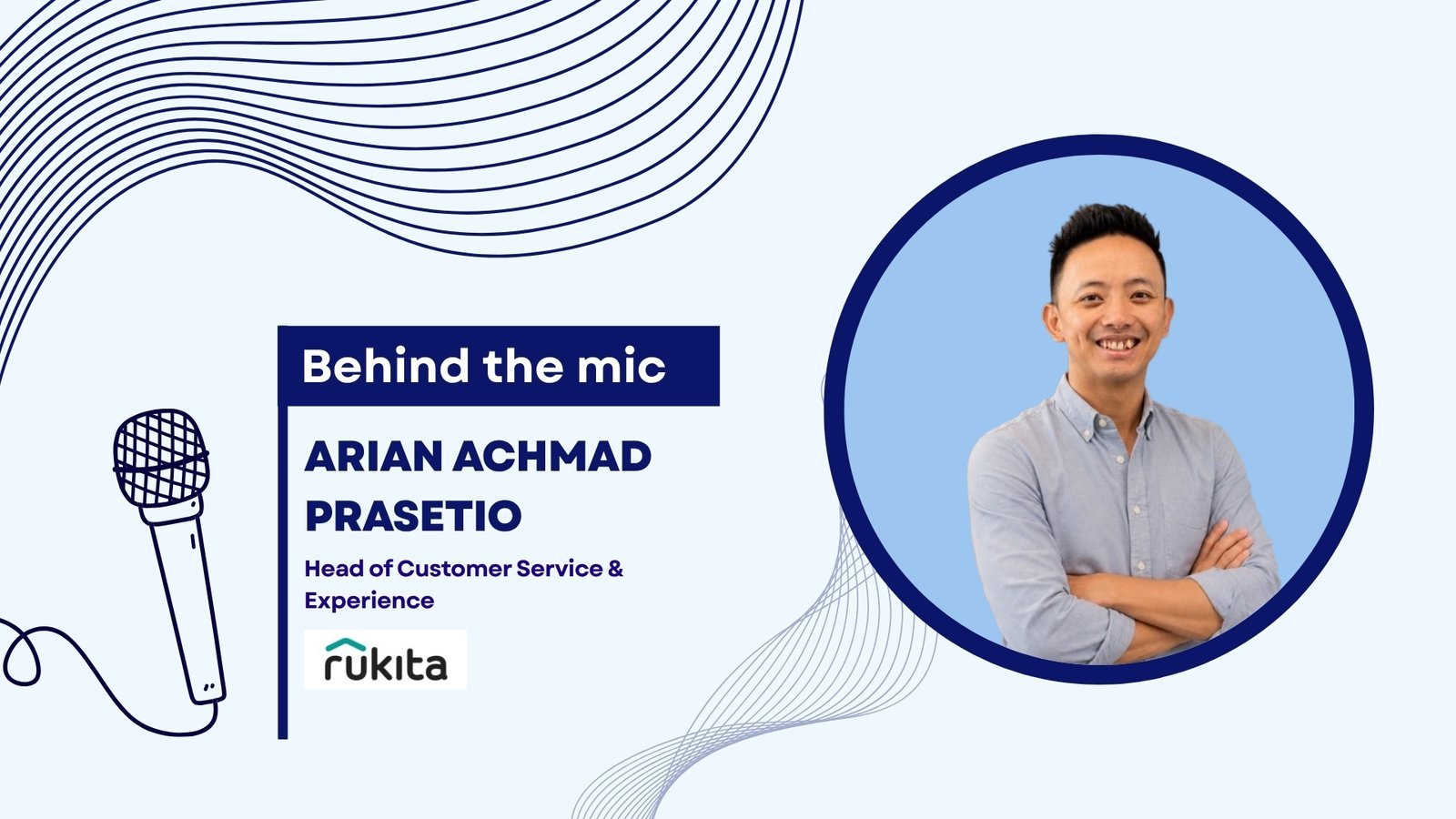
Arian Achmad Prasetio is a customer experience leader with 19 years of experience across diverse industries, including telecommunications, e-commerce, ride-hailing, fintech, and property technology. He has a proven track record of building high-performing customer experience organizations, leading customer-centric transformation initiatives, and optimizing operations to enhance customer satisfaction, operational efficiency, and business growth. Arian is passionate about aligning customer experience strategies with evolving customer expectations and emerging technologies to deliver lasting business impact.
In this edition, Arian shares his perspective on customer experience, evolving expectations, and the role of technology in shaping meaningful customer interactions.
Q1. What motivated you to pursue a career in customer service and customer experience, and what key experiences shaped your journey across industries such as telecommunications, e-commerce, ride-hailing, fintech, and property technology?
When I started my career 19 years ago, customer service was simply the best opportunity available to me at the time. I even moved from one city to another in search of work. But over time, I discovered that customer service was more than just a job—it gave me a sense of purpose and satisfaction because I could directly make a difference in someone’s experience.
That realization motivated me to explore different industries and understand how customer needs and behaviours evolve. I’ve been fortunate to work across telecommunications, e-commerce, ride-hailing, fintech, and property technology, gaining exposure to different types of customers, challenges, and business models.
While each industry is different, the goal remains the same: to create the best possible experience for customers and stakeholders. That continuous opportunity to learn, adapt, and make an impact is what has kept me passionate about customer service and customer experience throughout my career.
From the beginning of my professional life, customer service has been my home, and it still remain today.
Q2. How have you leveraged emerging technologies such as AI, automation, and data analytics to enhance customer service and improve customer experience?
When I first started exploring AI about seven years ago, I mainly saw it as a way to keep the company competitive. At first, I was also worried that AI might replace people’s jobs. Over time, I realized that AI is better used to support people and improve processes.
One example is my experience on handling customer refund process. It was fully manual, which caused an error rate >10%, longer resolution times, and many follow-up contacts from customers because refunds are very sensitive.
Before implementing AI and automation, we analysed historical tickets, resolution time, CSAT, and error rates to make sure we were solving the right problem. After implementation, we were able to reduce errors and resolve cases much faster, while allowing our agents to focus on more complex and valuable customer interactions.
That experience changed my perspective. I believe AI should not replace people, but remove repetitive work, improve accuracy, and help us deliver a faster and better customer experience—especially during peak periods.
Q3. What are some of the most significant challenges you've faced while leading customer-centric transformation initiatives, and how did you overcome them?
One of the biggest challenges I faced was getting other departments on board with the transformation plan. Customer experience transformation often involves teams such as Data, Technology, Product, Finance, Operations, and Marketing, so changes in CX can affect their existing processes and create
resistance.
To overcome this, we worked closely with all stakeholders and used customer feedback and data to explain why the transformation was necessary. This helped shift the conversation from “additional work” to creating better customer experiences and business outcomes.
Another challenge was managing expectations around the results. Transformation requires significant time, resources, and investment, so stakeholders naturally expect immediate results. I addressed this by setting clear expectations and communicating progress throughout each stage of the transformation.
Not every initiative delivers immediate impact. For example, changes to an app’s UI/UX may take time because customers need to become familiar with the new experience. However, some changes can deliver faster results, particularly those related to financial processes such as refunds or initiatives focused on the top three customer issues. The key is to set realistic expectations while continuously tracking and communicating the results.
Q4. What strategies have you found most effective in building high-performing customer experience organizations that drive customer satisfaction and business growth?
After quite some time working across telco, e-commerce, ride-hailing, fintech, and proptech. I believe a high-performing CX organization starts with three
things: people, data, and accountability.
First, build a culture where everyone understands that customer experience is a company-wide responsibility, not just the job of the CX team.
Second, make decisions based on customer data and feedback. The goal is not simply to collect feedback, but to identify the most critical pain points and turn them into clear improvement priorities.
Finally, connect CX performance with business outcomes. Customer satisfaction is important, but we also need to show how better experiences improve retention, efficiency, loyalty, and ultimately business growth.
High-performing CX is about creating value for both the customer and the business
Q5. Can you describe a specific instance where customer insights or operational improvements significantly enhanced customer satisfaction or service efficiency?
One example is using customer insights to identify which parts of the customer journey create the most friction. Instead of focusing only on reducing operational costs or headcount, we look at how operations can better support the customer.
For example, repetitive and simple inquiries can be handled through automation, allowing CX teams to focus on more complex issues that require empathy, judgment, and problem-solving.
The goal is not to replace people, but to remove unnecessary work from them so they can focus on customers who need human support. This approach improves response time, service consistency, and ultimately customer satisfaction.
Q6. Could you share a success story where your leadership in customer service and experience transformation delivered measurable improvements in customer loyalty, operational performance, or business outcomes?
In my current role on my current company right now, we focused on improving one of the biggest pain points in the customer journey: waiting time.
By analysing customer feedback and operational data, we identified bottlenecks in the service process and redesigned the way cases were handled. We introduced process improvements and better use of technology such as AI while ensuring human support remained available for more complex cases.
As a result, we were able to reduce customer waiting time, improve resolution speed, and increase customer satisfaction. It showed that even small
improvements in the customer journey can create a significant impact when they are based on real customer needs.
The impact and outcome is quite very tremendous for business, where we able to boost up length of stay on customer side. Ensuring that all of they’re issue or complaint when they stay with us address it quickly and also effectively.
Q7. How do you collaborate with cross-functional teams such as operations, product, technology, and business leaders to deliver seamless customer journeys?
Based on my experience work across different industries, I’ve learned that CX cannot work in isolation. The customer journey crosses multiple departments, so the solution has to as well.
We work closely with Operations, Product, Technology, and Business leaders to identify where customers experience friction and determine which improvements will have the biggest impact. Customer feedback and data are important tools to make sure we are solving real customer problems.
We then work together to improve the process, product, or technology behind the customer journey. This approach creates shared ownership and ensures that CX improvements are not only good for customers but also sustainable for the business.
Q8. How do you balance the adoption of AI and automation with the need to maintain empathy, trust, and personalized customer interactions?
We see AI as an enabler, not a replacement for human interaction. We use AI and automation to handle repetitive tasks, routine inquiries, and financial calculations, which allows our customer experience team to focus on more complex cases that require judgment, empathy, and personalized solutions.
At the same time, we make customer engagement proactive. Our agents don’t just wait for customers to raise issues; they reach out, ask about their
experience, understand their needs, and identify opportunities to provide additional support. We also maintain face-to-face engagement and organize community activities that are relevant to our customers’ lifestyles.
The balance is simple: automate the transactional, humanize the relationship.
Q9. What best practices have you implemented to build scalable customer service operations that remain agile, customer-centric, and future-ready?
We build scalable customer service around three principles: customer centricity, technology, and human connection. Our purpose is to consistently deliver an exceptional customer experience and differentiate ourselves in an increasingly competitive industry.
We continuously explore and adopt new technologies to automate processes, improve responsiveness, and enable our teams to scale. At the same time, we deliberately preserve human interaction through personalized communication, proactive engagement, face-to-face touchpoints, and community initiatives.
The key is not choosing between technology and people but continuously finding the right balance between the two as customer expectations evolve.
Conclusion
Arian Achmad Prasetio’s perspective highlights that the future of customer experience is not about choosing between technology and people, but finding the right balance between the two. From using AI and automation to reduce repetitive work to keeping empathy and human interaction at the heart of customer relationships, meaningful CX transformation starts with understanding real customer needs.
As customer expectations continue to evolve, organisations that combine data-driven decisions, scalable technology, and genuine human connection will be better positioned to create experiences that deliver value for both customers and the business.
“Stay tuned for more such insights and conversations from industry leaders shaping the future of customer experience at the Conversational AI & Customer Experience Summit.”